
By Carolin Wacker, Etiketten-Labels 5-2026, pages 46–47
By joining the Transparency Service Provider Network, Hybrid Software is integrating Amazon Transparency into existing workflows. This will enable label and packaging printers to securely incorporate individual codes into their print production, with an eye toward other serialization and authentication applications as well.
With Amazon Transparency, Amazon, the world’s largest online retailer, aims to make branded products uniquely identifiable and verifiable throughout the supply chain. Each unit of a participating product receives a unique identifier. For codes issued by Amazon, consumers can scan the identifier using the Amazon Shopping app or Transparency app to verify the product’s authenticity. According to Amazon’s latest figures cited in the article, more than 2.7 billion product units have been verified as authentic through the Transparency program. More than 90,000 brands worldwide have registered since its launch in 2017.
For Hybrid Software, the new connection to the Amazon Transparency program fits into a broader trend. “We are seeing growing demand for secure product identification,” says Igor Vandromme, Vice President/General Manager of Hybrid Software Brandz. No single initiative is driving this demand. “Brand owners want to better protect their products against counterfeiting, regulatory requirements are placing greater demands on traceability, and the industry is preparing for the wider adoption of 2D codes based on GS1 standards.”
Existing Software as the Foundation
Even before joining the Service Provider Network, Hybrid Software already had technologies for serialization and variable data printing. According to the company, working with Amazon therefore did not mean entering a fundamentally new field. “Joining gives customers the assurance that our solutions are compatible with Amazon’s requirements. At the same time, they can integrate Amazon Transparency into their existing production workflows,” explains Vandromme.
Brand owners and their production partners should not have to establish a separate, largely manual process for authentication. “Customers increasingly expect workflow solutions that support such requirements without unnecessarily complicating packaging artwork management or print production,” says Vandromme.
Through Hybrid Software Brandz, Hybrid Software already works directly with brand owners, consumer goods companies, and retailers. “Amazon Transparency complements this strategy because authentication and serialization requirements generally originate with the brand owner and must then be implemented throughout the packaging supply chain,” Vandromme explains. At the same time, collaboration with packaging manufacturers, reprographics and prepress companies, and printers remains essential.
From Code Retrieval to Print Production
As a member of the Amazon Transparency Service Provider Network, Hybrid Software integrates variable data into existing production processes. Codes must be retrieved, securely managed, and assigned to the relevant product or production order. They are then incorporated into the print artwork and processed as variable information during printing.
“Our task is to integrate Amazon Transparency into existing packaging production workflows,” Vandromme summarizes. “This includes retrieving Transparency codes, managing them securely within the workflow, incorporating them into print artwork as needed, generating print-ready production data, and reliably processing the variable data throughout the entire production process.”
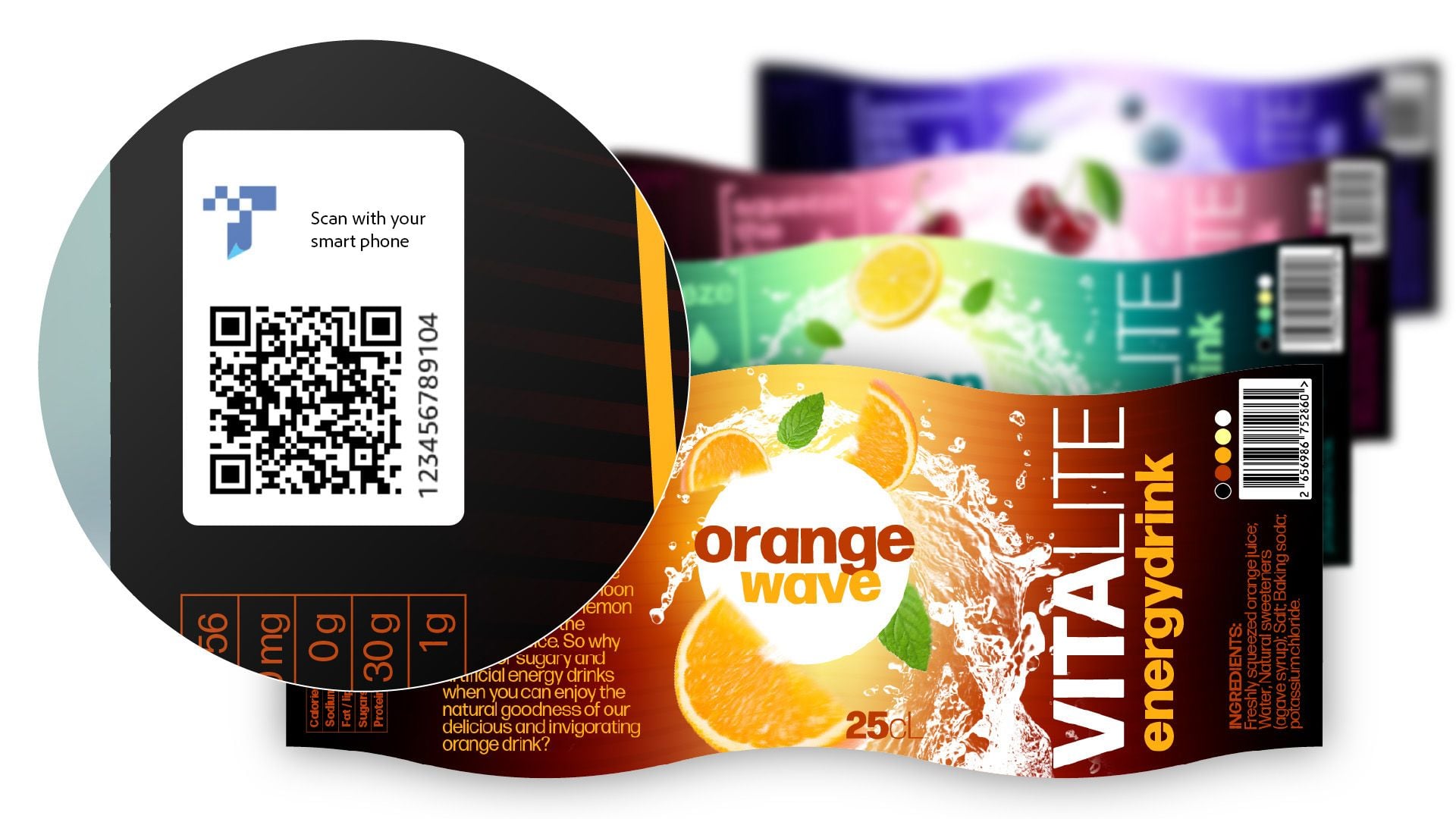
The Artflow artwork management software can automatically retrieve Amazon Transparency codes as early as the briefing stage and embed them in artwork proofs. The browser-based system supports brand owners, retailers, and design agencies with artwork and approval processes. At the downstream production stage, the PACKZ PDF editor and CLOUDFLOW workflow software handle variable data printing and serialization tasks. These tools enable barcode generation and print production processes to be integrated into existing packaging and label production environments.
The goal is to make Amazon Transparency a standard part of the production workflow rather than a separate process carried out manually.
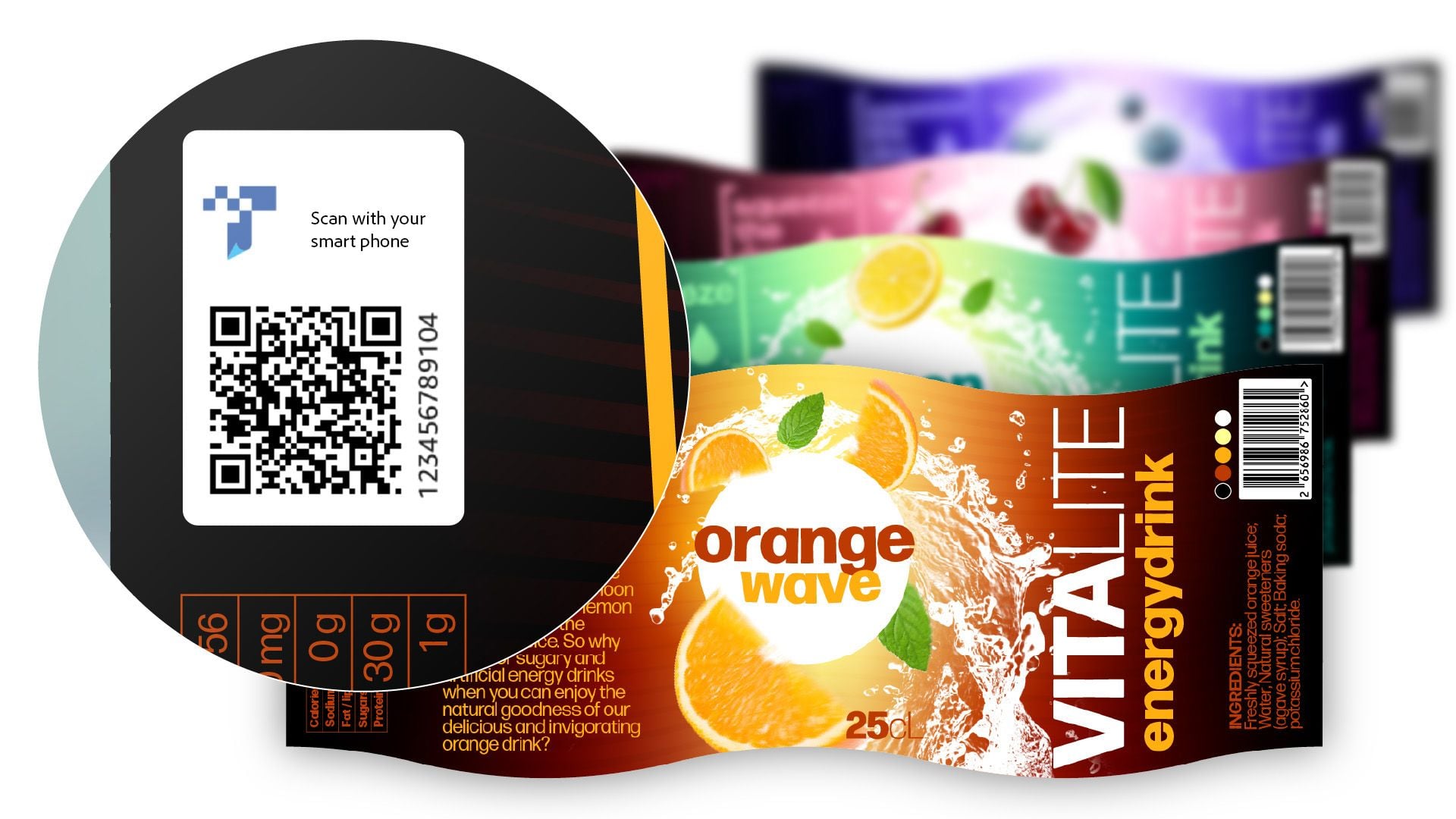
Artflow artwork management software can automatically retrieve Amazon Transparency codes during the briefing stage and embed them in artwork proofs.
Printers Implement Serialization
For label and packaging printers, a substantial part of the practical work lies here. They must ensure that every designated package or label receives the correct unique identifier. This increases demands not only on variable data printing but also on automated data transfers and control mechanisms. For serialized products, it is not enough for a barcode to be technically readable: the identifier must also be correctly assigned to the intended product.
“As demand for product authentication and traceability increases, printers are becoming important partners for brand owners,” says Vandromme. Hybrid Software sees this as an evolution of existing responsibilities rather than an entirely new business model. “Our primary goal is to support existing customers as they address changing market requirements. It is less about establishing a completely new business model,” Vandromme explains.
Capabilities Extend Beyond Amazon
Not every element of this workflow is specific to Amazon. Code retrieval, management, and application are the steps most directly tied to the Transparency program. Many technical steps before and after them are also required for other forms of serialization. According to Hybrid Software, these include preparing print artwork, managing variable data, generating barcodes, proofing, production automation, and quality control. These capabilities are also relevant to other authentication programs and GS1 2D codes. “Our approach is to develop flexible workflow functions that support different applications and are not limited to a single program,” says Vandromme.
Under certain conditions, Amazon now also allows existing serial numbers to be linked to Amazon Transparency. Brands therefore do not necessarily have to add an additional Amazon code to their packaging. However, according to Amazon, consumer verification through the Amazon or Transparency app is currently tied to Transparency codes issued by Amazon.
Open to Additional Systems
For Hybrid Software, collaboration with Amazon should not create dependence on a single platform. “Openness has always been an important part of our strategy,” Vandromme emphasizes. Customers rarely operate within a single closed ecosystem. The workflow solutions are therefore designed to support different production environments and industry standards.
Hybrid Software is also not ruling out further collaborations. The company considers partnerships where interfaces could simplify implementation or improve interoperability.
The significance of the Amazon integration therefore also lies in how authentication programs will be incorporated into packaging workflows in the future. With Amazon Transparency, Amazon brings a widely used application. Hybrid Software is positioning itself at the intersection of the requirements of Amazon and brand owners and their technical implementation in artwork, prepress, and production. “Our goal is to provide solutions that can adapt to changing market requirements,” says Vandromme.
